Home / Territory / Architectonic / Ferrohaus, Archaeology of the Future

Ferrohaus, Archaeology of the Future

Subject Ferrohaus
Author Justus Dahinden
Location Zürich, Switzerland
Year 1967

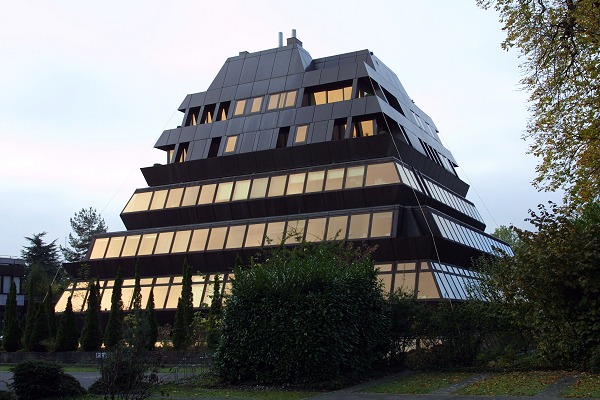
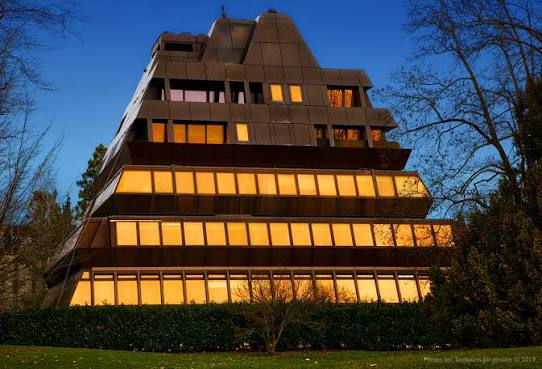
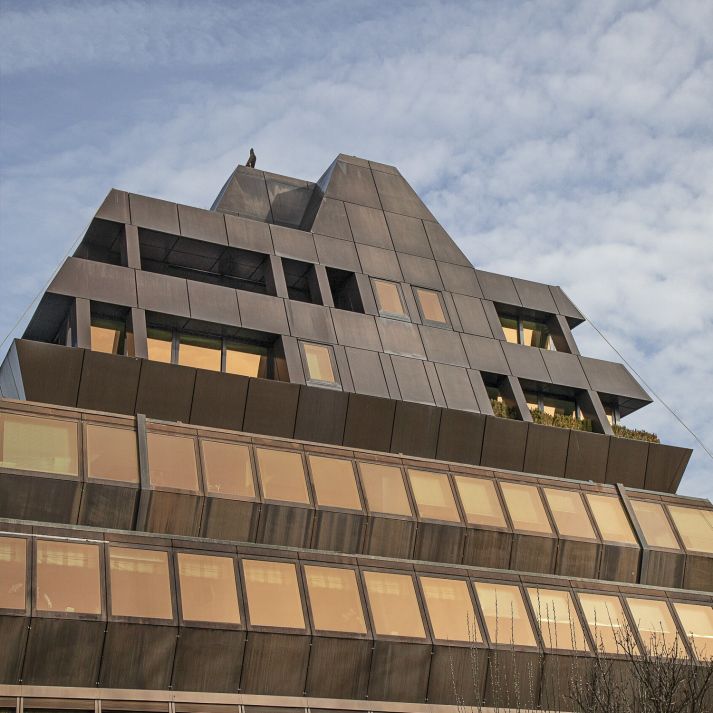
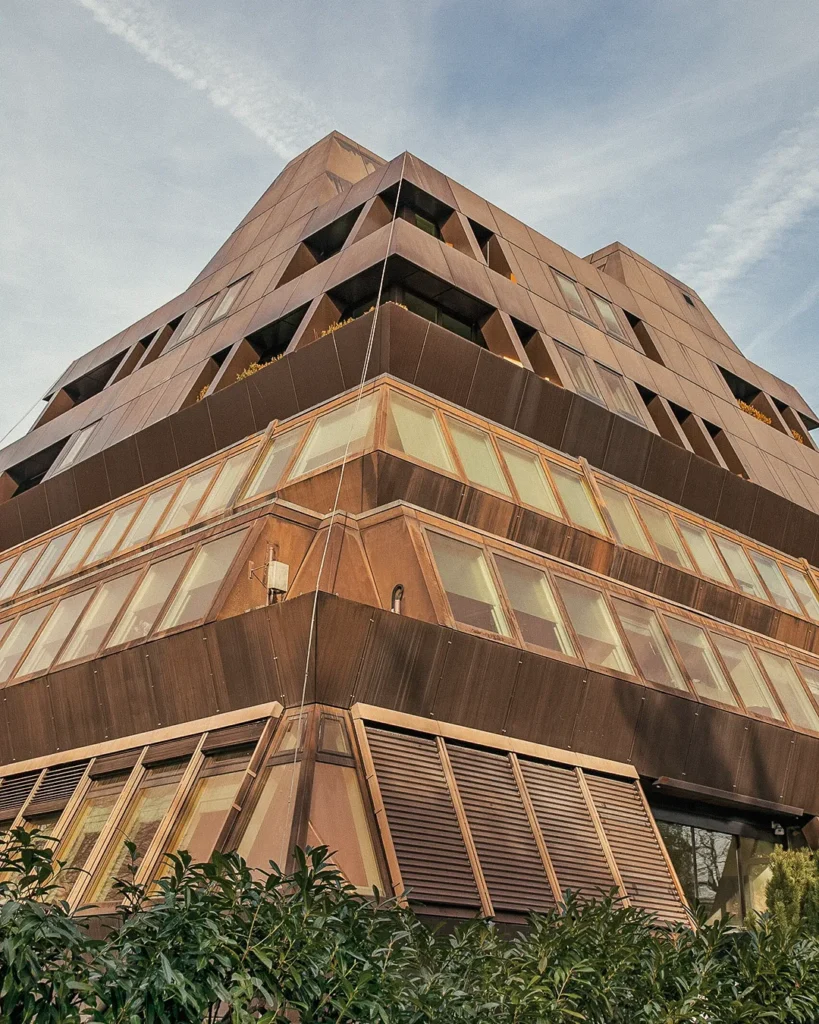
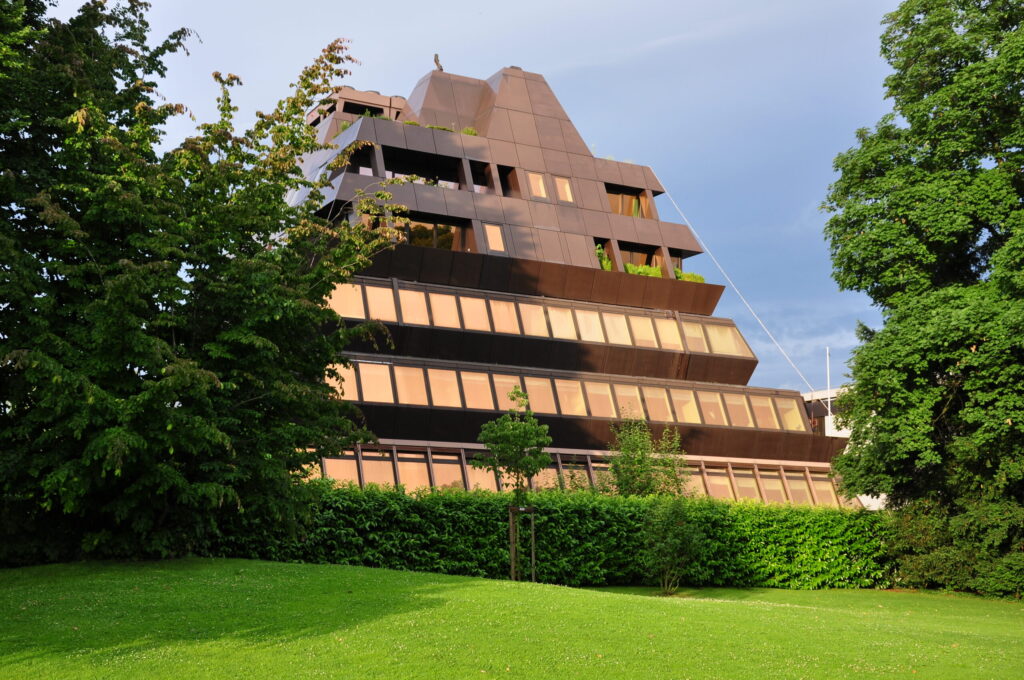
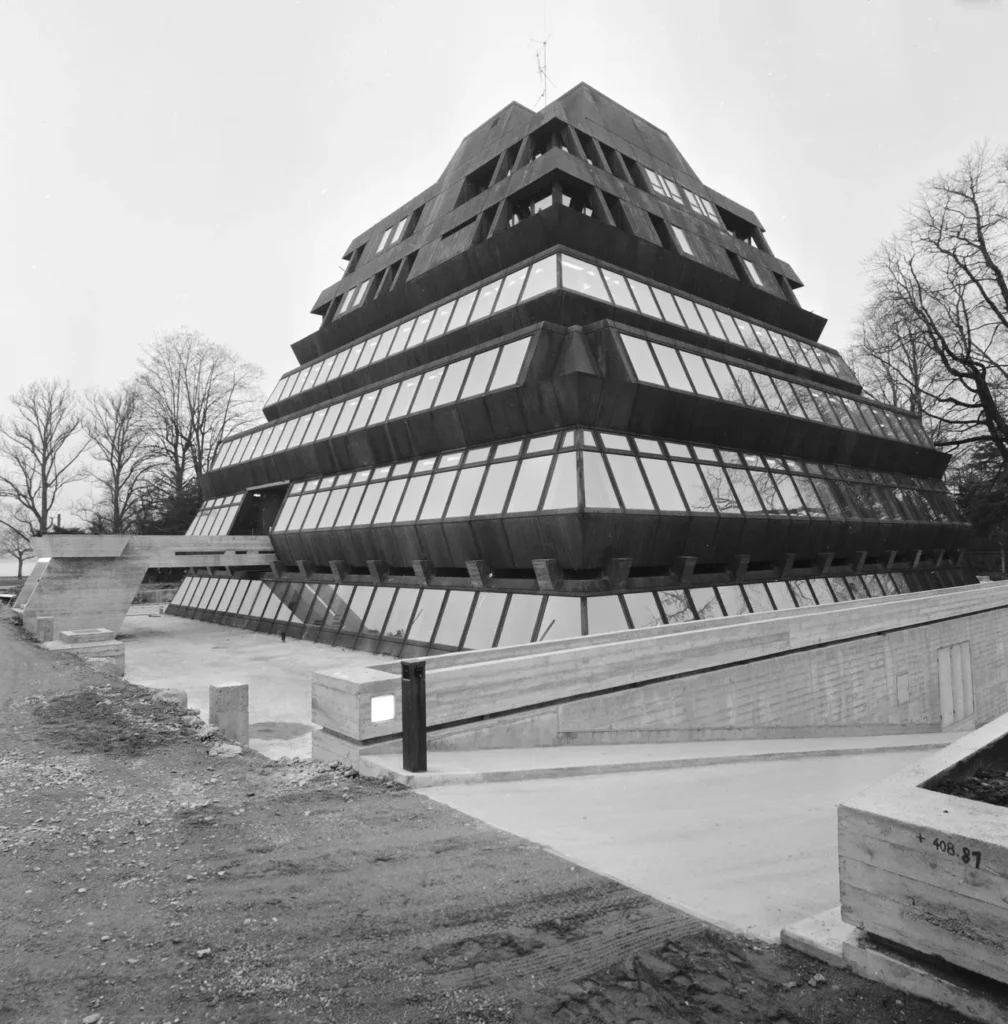
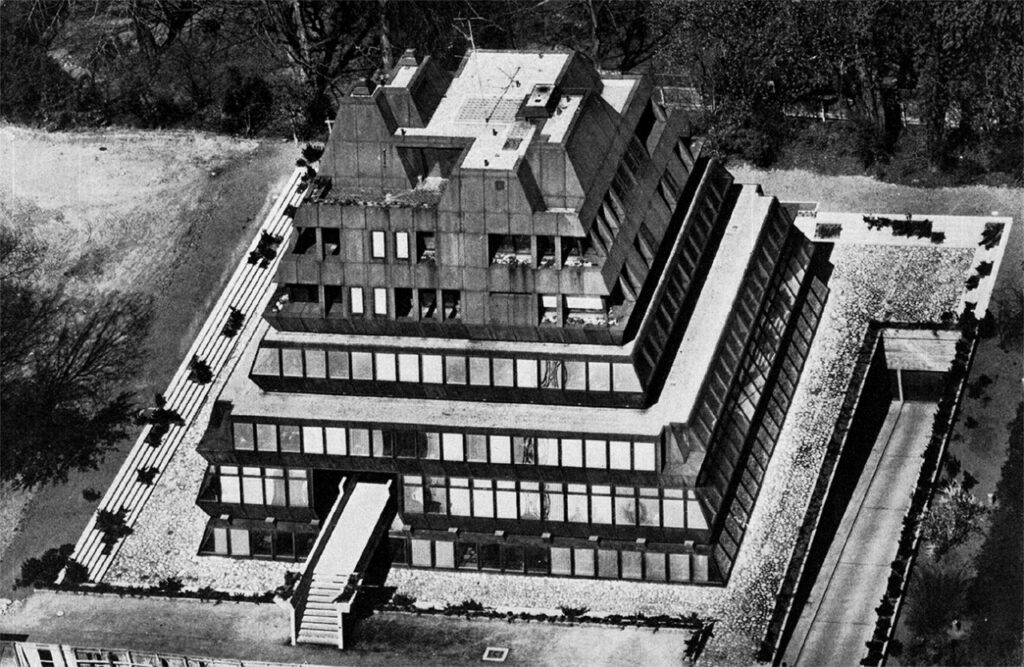
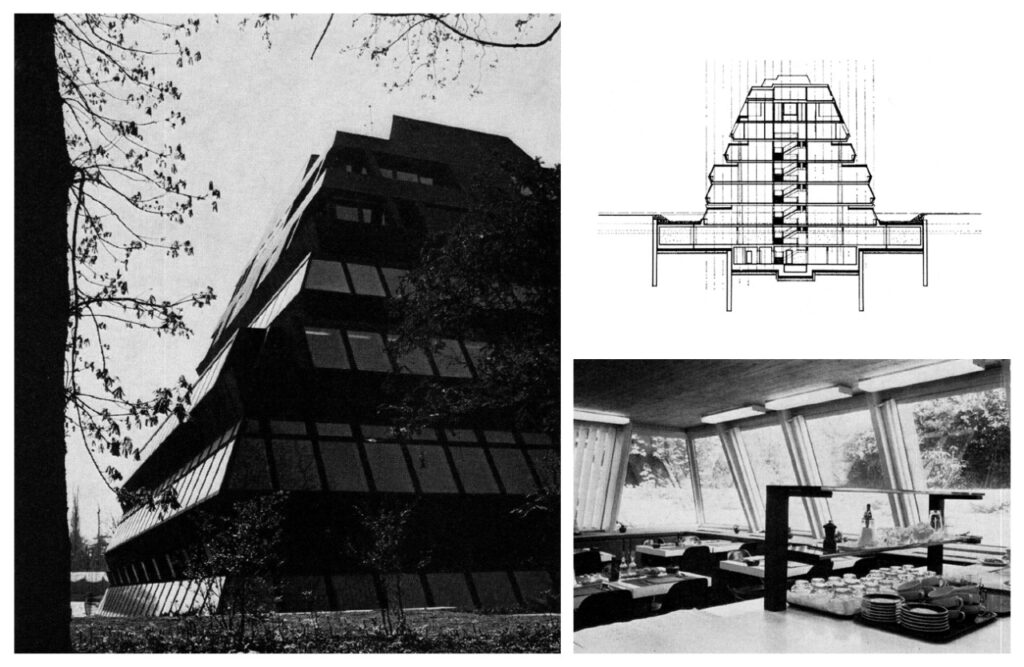
Justus Dahinden began experimenting with oblique forms in the 1950s with the Zelthaus in Rigi. Viewing tall vertical façades as threatening, he developed the concept of the ‘cosmoform’, the principle being to tilt vertical structures towards an oblique plane. In the 1960s, a metalworking company commissioned him to design an office building on the lakeshore in Zurich. This provided a further opportunity to experiment with distinctive volumes and structures.
Justus Dahinden chose to draw on the formal repertoire of architectural history and designed a Corten steel pyramid that borrows heavily from Mayan pyramid temples. This deliberately provocative choice was also a pragmatic one: the sloping form complied with planning regulations stipulating a set-back of the façade on the upper floors, whilst significantly reducing the amount of shade cast. Yet the deliberately futuristic, even space-age appearance of the Ferrohaus (Steel House) seems a natural progression over time, between the archaeology of past forms and the architecture of the future.

Ferrohaus Zurich Justus Dahinden
Back to the Atlas
Comments

No comments yet -- be the first to share your thoughts.

Leave a comment

Your email address will not be published. Required fields are marked *

Back to top

Begin typing your search term above and press enter to search. Press ESC to cancel.

Back To Top